







Quick Answer: Budget for AI search visibility the way you would budget for any long-term marketing channel: list the work involved (site foundations, content, earned coverage, measurement and management time), decide who will do it, fund it partly from your existing SEO budget because the foundations overlap, and release money in stages tied to checkpoints. No budget can guarantee citations or revenue, so plan for regular review rather than certainty.
For a growing business, a new marketing line has to compete with hiring, product work and paid acquisition that already shows results. AI search visibility is a harder sell than most, because its outcomes arrive slowly and are only partly measurable.
That does not mean it should be funded on a hunch. A useful budget starts by breaking “AI visibility” into the actual tasks involved, and then choosing how much of that work to do yourself.
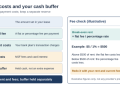
Three ways to resource AI search visibility work, and what each one mostly costs you.
What the Money Actually Pays For
Most AI search visibility work falls into five buckets. Several of them already exist inside a healthy SEO program, which matters for how you fund them.
| Cost bucket | What it covers | Overlap with SEO |
|---|---|---|
| Site foundations | Crawl access, indexing, page speed, structured data, fixing outdated product pages | High |
| Content | Pages that answer buyer questions clearly, comparison and use-case pages, updates to existing pages | High |
| Earned authority | Coverage, reviews, directory profiles and expert mentions on third-party sites | Medium to high |
| Measurement | Prompt sampling, platform reports, analytics setup and reporting time | Medium |
| Management time | Strategy, approvals and subject-matter input from your own team | Often forgotten |
The overlap is not a coincidence. Google says the best practices for SEO remain relevant for its AI features and that no special optimizations are needed to appear in them (Google Search Central). Spending that strengthens your site and reputation tends to serve both channels at once.
Three Ways to Resource the Work
In-house
Your team does the research, writing, technical fixes and tracking. The cash cost can be lower, but the real cost is time, and the work competes with every other priority. This suits companies that already have a capable content and SEO team with spare capacity.
Hybrid
Your team owns strategy and subject-matter input, while freelancers or specialists handle writing, technical work or outreach. This spreads the load, but someone has to coordinate several suppliers and keep definitions consistent between them.
Done-for-you
An outside team runs the program end to end. Providers such as GoBlinkly take on answer engine optimization for B2B brands, including the supporting SEO, content production and visibility tracking. You pay an external fee and may reduce delivery work internally, while still providing approvals, access and subject-matter input. Compare proposals on scope, on who actually does the work and on how results are reported, not on the monthly figure alone.
An Illustrative Budget Split
The figures below are invented to show the arithmetic. They are not a benchmark, and the right amounts depend on your market, your starting point and your resourcing model.
Imagine a business that sets aside $10,000 a month for AI search visibility under a hybrid model:
| Bucket | Share | Monthly amount (illustrative) |
|---|---|---|
| Site foundations | 15% | $1,500 |
| Content | 35% | $3,500 |
| Earned authority | 25% | $2,500 |
| Measurement | 10% | $1,000 |
| Management time | 15% | $1,500 |
| Total | 100% | $10,000 |
Over twelve months, that comes to $120,000. In practice the split should move over time. A site with crawl problems might put more into foundations during the first quarter, then shift that money into content and earned authority once the basics are fixed.
Fund It From the Right Place
Because so much of the work overlaps with SEO, avoid creating a separate budget that pays twice for the same page or the same technical fix. A practical approach is one search budget with two sets of measures: rankings and organic traffic for classic search, and presence, citations and AI referrals for answer engines.
Where the money comes from also shapes expectations. Funding from a brand or awareness budget sets a different bar from funding out of a demand generation budget that expects leads within a quarter. Agree which bar applies before the first invoice arrives.
Judge the Spend in Stages
Release budget in stages rather than committing a full year on day one. A reasonable structure is a short setup phase with clear deliverables, such as fixed crawl issues and a baseline prompt sample, followed by quarterly reviews against agreed measures.
Be wary of anyone who promises guaranteed outcomes. Google’s own guidance on hiring an SEO warns that nobody can guarantee a top position in its results (Google Search Central), and AI answers also vary across queries, modes and runs. Ask instead what will be delivered, how progress will be measured and what happens if it stalls.
Build a Simple Review Scorecard
Quarterly reviews go better when everyone looks at the same page. A one-page scorecard keeps the conversation on evidence rather than impressions. Include:
- Deliverables shipped: pages fixed, articles published, profiles updated and outreach completed, compared with the plan
- Eligibility: whether priority pages are crawlable and indexed, and whether the search crawlers you want can reach them
- Visibility in your sample: the share of tracked answers that name or cite you, by engine, with a note on run-to-run variation
- AI referrals: sessions from AI tools in your analytics, kept separate from other traffic
- Qualified leads: opportunities where AI research played a part, from analytics and from what buyers tell sales
- Internal hours: time your own team spent, so the true cost stays visible
If deliverables are on track but visibility has not moved after a reasonable period, the next quarter’s budget should shift toward whatever the diagnosis points to, not simply repeat.
Common Budgeting Mistakes
- Buying tools nobody acts on. Tracking without execution produces reports, not results.
- Funding new content but not updates. Outdated pages can feed outdated answers, so reserve time to refresh what already exists.
- Paying for inauthentic mentions. Google says seeking inauthentic mentions is not helpful, because its ranking and spam systems work against them (Google Search Central).
- Ignoring internal time. Approvals, interviews and product input are real costs, even when they never appear on an invoice.
Conclusion
A sensible AI search visibility budget is built from tasks, not from a headline number. List the work, choose a resourcing model, share foundations with SEO, release money in stages and review results honestly. That keeps the spend accountable while giving a slow-building channel enough time to show what it can do.
Frequently Asked Questions
How much should a growing business spend on AI search visibility?
There is no standard figure. Start from the work you need, the resourcing model you choose and what you already invest in SEO, then test a staged budget and adjust it after each review.
Is AEO a separate budget from SEO?
It does not need to be. Much of the work overlaps, so many companies fund both from one search budget and report on each channel with its own measures.
Is done-for-you cheaper than in-house?
It depends on your team. In-house can cost less cash but more time. Done-for-you usually costs more cash but frees internal capacity. Compare the totals, including staff time.
When should we review the budget?
Quarterly works for most growing businesses, with a lighter monthly check on deliverables. Give the program enough time for buying cycles to play out before judging it on pipeline.