







Art is one of the earliest ways children make sense of the world around them. Before they can explain an idea in words, they can communicate through a drawing, a painted shape, or the simple act of combining different materials. In the preschool years, these experiences are more than enjoyable activities. They help children develop observation skills, experiment with new ideas, and build confidence in their ability to express themselves.
A thoughtfully designed art environment gives young learners the freedom to investigate materials without worrying about producing a perfect result. For families considering a Preschool in Almaden Valley San Jose, understanding the role of creative exploration can offer useful insight into what a well-rounded early childhood education should include. Art studios provide opportunities to develop fine motor coordination, sensory awareness, language, and independent thinking through meaningful, hands-on experiences.
Understanding the Role of Art in Early Childhood Education
Preschool children learn most effectively when they can interact directly with their surroundings. Art activities support this natural learning process by turning abstract concepts into experiences they can see, touch, and manipulate.
For example, mixing yellow and blue paint introduces color relationships in a way that a verbal explanation alone cannot. Pressing a sponge into paint demonstrates how different tools create different patterns. Working with clay allows children to discover how pressure changes the shape of a material.
These discoveries encourage curiosity. Rather than simply following instructions, children begin asking questions, making predictions, and testing their own ideas.
Exploring Color Through Hands-On Activities
Color is often one of the first artistic concepts preschoolers recognize and experiment with. An art studio creates an environment where children can move beyond identifying basic colors and begin understanding how they interact.
Learning Through Color Mixing
Providing washable paints, colored water, and transparent materials allows children to experiment with primary and secondary colors. They might discover that combining red and yellow produces orange or that adding white makes a color appear lighter.
The educational value lies in the process. Children observe changes, compare results, and develop early problem-solving skills. Educators can extend these discoveries through simple questions such as, “What do you think will happen if we add another color?”
Connecting Colors With Everyday Experiences
Children also begin associating colors with familiar objects, natural environments, and emotions. Painting a sunny afternoon or creating a picture inspired by autumn leaves helps them connect artistic choices with personal experiences.
These conversations strengthen vocabulary and encourage children to explain their thinking.
Discovering Texture Through Sensory Exploration
Texture introduces another important dimension of creative learning. Preschool art studios can offer materials with contrasting physical properties, helping children understand differences through touch and observation.
Common materials include:
- Soft cotton, felt, and fabric scraps
- Rough cardboard, corrugated paper, and natural fibers
- Smooth stones, wooden shapes, and large beads
- Playdough, clay, and child-safe modeling materials
- Leaves, seed pods, and other natural objects
Why Material Variety Matters
When children press, fold, tear, roll, or layer materials, they discover how different surfaces respond to movement and pressure. These actions strengthen hand muscles and support the fine motor development needed for future tasks such as writing, drawing, and using classroom tools.
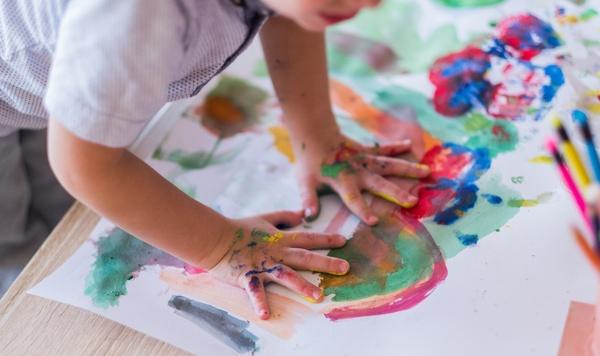
Texture-based activities also provide valuable sensory input. However, educators should consider individual sensory preferences. Some children enjoy finger painting, while others prefer brushes, sponges, or tools that allow them to participate without direct contact with certain materials.
Encouraging Creative Expression and Independent Thinking
One of the most important features of an effective preschool art studio is the opportunity for children to make their own decisions.
An activity does not always need a predetermined outcome. Instead of asking every child to create an identical paper flower, an educator might provide colored paper, glue, scissors, and natural materials, allowing each child to develop an individual interpretation.
This approach supports several areas of development:
Confidence: Children gain a sense of ownership when their ideas are respected and displayed.
Decision-making: Selecting colors, materials, and techniques encourages independent choices.
Communication: Describing artwork helps children express thoughts, preferences, and experiences.
Problem-solving: Experimenting with materials teaches children to adjust their approach when something does not work as expected.
At Action Day Schools, creative learning can be understood as part of a broader early childhood experience in which exploration, purposeful activities, and developmental growth work together.
What Makes a Good Preschool Art Studio?
The quality of an art experience depends on more than the number of materials available. The environment, teaching approach, and attention to safety all influence how children engage with creative activities.
Important Factors for Parents to Consider
A well-organized art space should provide age-appropriate, non-toxic materials, accessible work surfaces, and sufficient room for individual and group activities. Materials should be stored where children can make supervised choices and learn to manage classroom resources.
Educators also play an essential role. They should offer guidance without controlling every decision, introduce new techniques gradually, and recognize effort rather than judging artwork according to adult expectations.
Clean-up routines, proper supervision, and awareness of choking hazards are equally important, particularly when younger preschoolers are working with small objects or mixed media.
Frequently Asked Questions
At what age should children begin participating in art activities?
Children can begin exploring age-appropriate art materials during toddlerhood. Activities should become more varied as their coordination, attention, and ability to follow simple instructions develop.
Does preschool art help prepare children for kindergarten?
Yes. Art experiences support fine motor control, listening, following directions, spatial awareness, and creative problem-solving. These skills contribute to broader kindergarten readiness.
Should parents correct or guide children’s artwork?
Parents can encourage children by asking about their creations and showing genuine interest. Rather than correcting shapes or suggesting that a picture should look different, allow children to explain what they have made.
Creative Experiences That Support Lifelong Learning
Preschool art studios offer children an opportunity to investigate their surroundings through color, texture, movement, and imagination. The most meaningful experiences are not necessarily the most elaborate projects. Often, they are simple opportunities to experiment, make choices, encounter challenges, and discover something independently.
When creative expression is treated as an essential part of early education, children develop more than artistic familiarity. They build the confidence, curiosity, coordination, and communication skills that support learning across subjects and experiences. A preschool environment that values this process gives young learners room to explore ideas at their own pace while developing a stronger understanding of themselves and the world around them.